What is WPC (Wood-Plastic Composite)? The Ultimate B2B Guide to Materials, Manufacturing & Applications
⚡ Quick Summary (TL;DR)
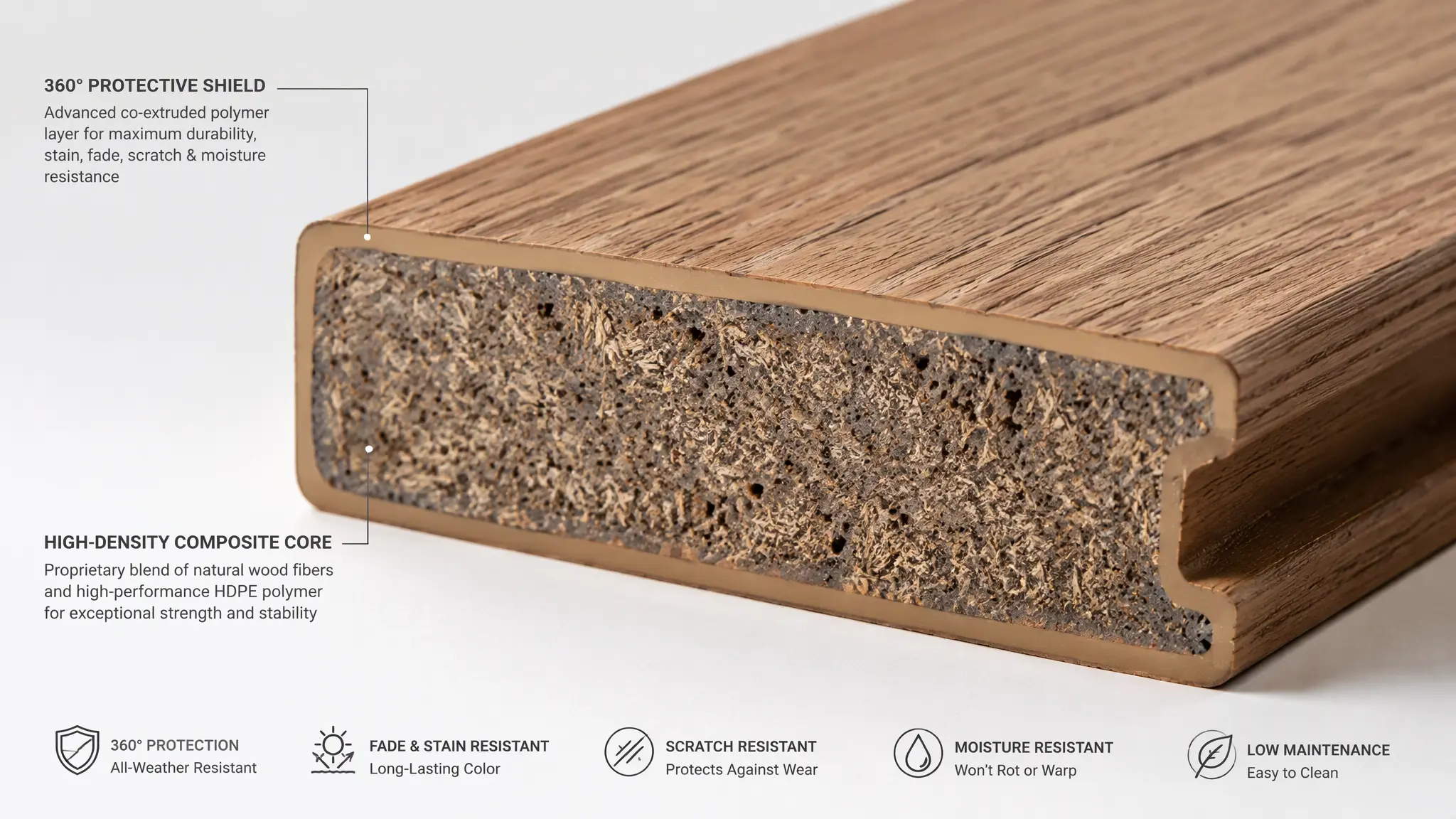
What is WPC? Wood-Plastic Composite (WPC) is a high-performance architectural material engineered from recycled natural wood fibers (55–60%), thermoplastic polymers like HDPE or PVC (30–35%), and functional additives (5–10%). It delivers the natural visual warmth of timber while providing complete resistance to rot, moisture, termites, and UV degradation—eliminating ongoing painting or sealing maintenance.
1. What is WPC Exactly? (Material Composition & Chemistry)
When buyers ask what is WPC, it is essential to understand that it is not simply “plastic wood.” It is an engineered composite manufactured through precision thermal extrusion, creating an intermolecular bond between organic wood particles and synthetic polymers.
Figure 1: Cross-section cutaway illustrating what is WPC co-extruded structure with a 360° protective outer cap layer.
Ultra-fine wood fiber flour (80–120 mesh) derived from post-industrial reclaimed wood.
Virgin or recycled HDPE / PVC providing structural flexibility and 100% moisture impermeability.
Coupling agents, UV stabilizers (HALS), anti-fungal agents, and high-temp color pigments.
2. The 4-Stage Manufacturing Process in a Modern Factory
Precision manufacturing determines product density, tensile strength, and long-term dimensional stability:
3. 1st Gen Traditional vs. 2nd Gen Co-Extruded WPC
When sourcing composite materials, understanding what is WPC technology evolution between Traditional (Uncapped) and Co-Extruded (Capped) profiles is crucial for matching project budget with climate requirements:
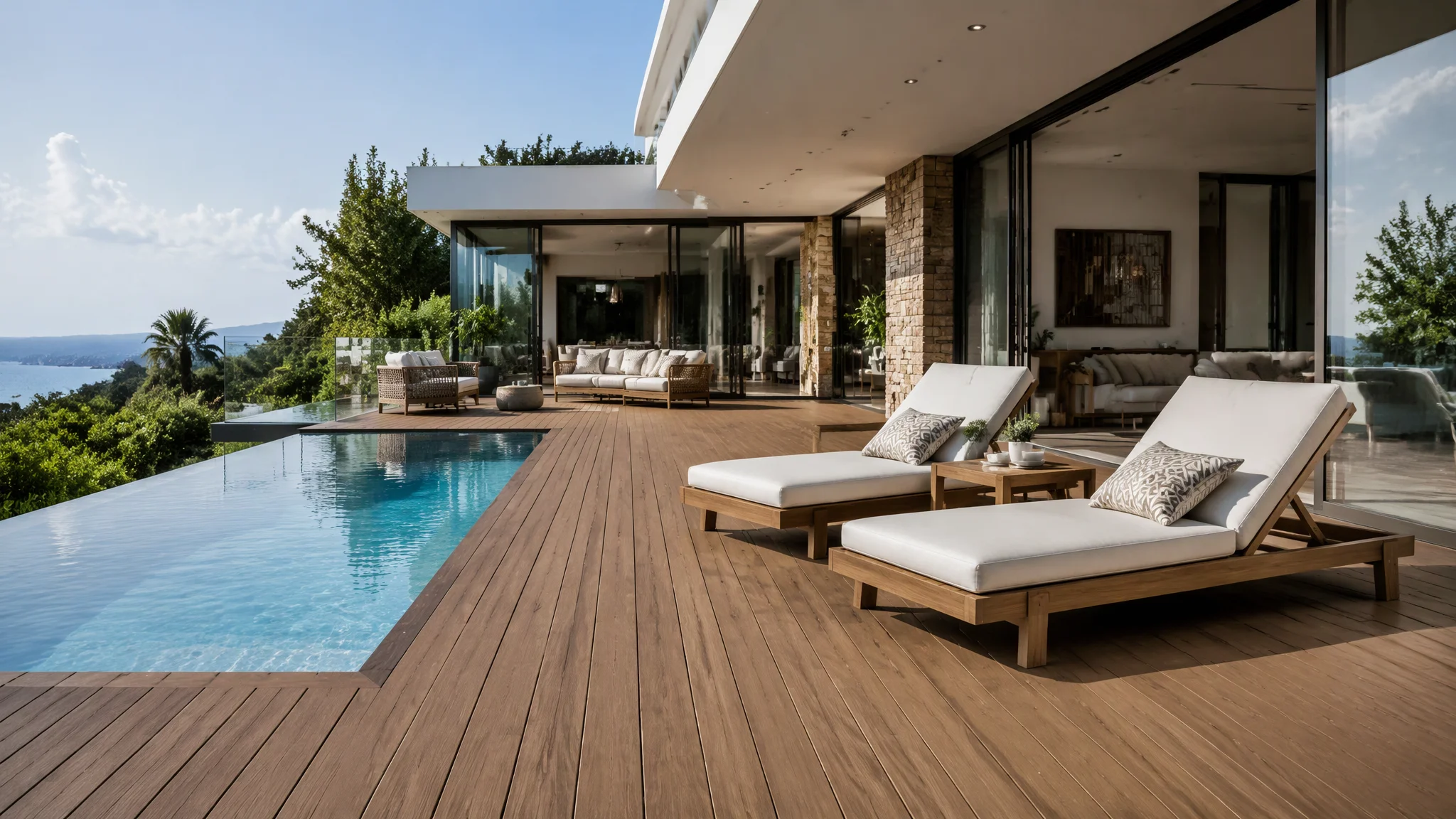
Figure 2: Stain resistance and anti-scratch durability comparison between 1st gen and 2nd gen co-extrusion WPC.
| Technical Feature | 1st Gen (Traditional WPC) | 2nd Gen (Co-Extrusion WPC) |
|---|---|---|
| Surface Structure | Monolithic (Wood fibers exposed) | 360° Shielded Polymer Cap Layer |
| Stain & Oil Resistance | Moderate (Porous; absorbs grease) | Ultra-High (Impervious to oil, wine, grease) |
| UV & Color Retention | Slight fading in first 6 months | Delta E < 3.0 after 3,000h Xenon Arc Test |
| Scratch Resistance | Standard | High-Hardness Modified Polymer Shield |
| Water Absorption | < 1.5% | < 0.2% (True Zero-Swelling) |
| Expected Lifespan | 10 – 15 Years | 25 – 30+ Years |
| Primary Use | Residential gardens, budget projects | Commercial boardwalks, resorts, coastal areas |
4. Key Engineering Performance & Benefits: Why Choose WPC?
Understanding what is WPC and its composite engineering explains why global commercial developers and municipal contractors are rapidly replacing traditional timber:
- Zero Routine Maintenance: No annual staining, sanding, chemical waterproofing, or insect treatments required.
- Splinter-Free & Barefoot Safe: High slip-resistance rating (R11 / Class C wet pendulum test) makes it ideal for public swimming pool surrounds.
- Minimal Thermal Expansion: Engineered core density (~1.35 g/cm³) prevents warping or bowing when installed with standard joist expansion spacing (300mm–400mm spans).
- Eco-Friendly & Sustainable: 100% recyclable, compliant with international environmental standards and preventing deforestation.
5. Main B2B Commercial Applications
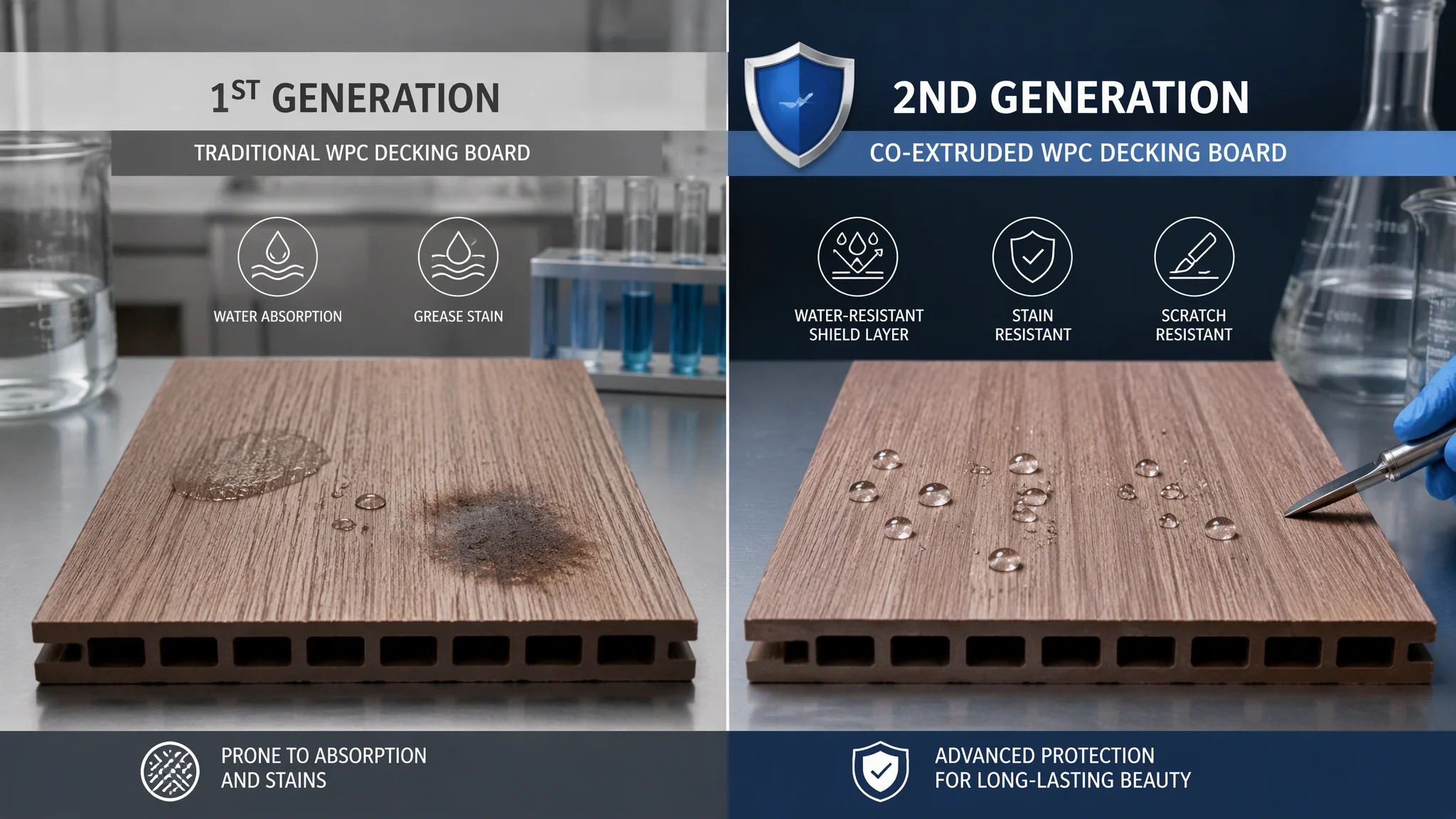
Figure 3: Luxury commercial swimming pool terrace engineered with VILLI co-extrusion composite decking.
🏭 Sourcing from Foshan Villi Building Materials Co., Ltd.
As a leading Chinese manufacturer, we provide turnkey OEM/ODM architectural solutions:
- Custom OEM / ODM Formulation: Custom profile dimensions, 20+ wood grain textures, and dual-color co-extrusion masterbatches.
- International Testing & Compliance: Certified according to international ASTM D7032 & EN 15534 standards, EPA TSCA Title VI, and RoHS requirements.
- One-Stop Mixed Container Loading: Consolidate VILLI WPC decking & wall cladding, exterior aluminum doors, and all-weather outdoor furniture in a single 40HQ container to maximize freight efficiency and lower landing costs.